For onboarding
Stop onboarding with a document nobody opens
The 40-page onboarding manual is written once, read by nobody, and out of date within a quarter. Meanwhile the tax form is missing, the laptop was never ordered, and the new starter spent day one waiting.
Instructions on the stage
What to do at this point, written where the work happens, updated in one place.
Forms required, not requested
Contract, tax, super and right to work all required before day one is reachable.
Automatic hand-offs
A task or a templated email fires when a starter reaches a stage.
Nobody left waiting
Target days per stage, flagged on the record and emailed the morning after.
The instructions sit on the step, not in a folder
Every stage of onboarding carries its own written instructions, visible on the stage while the work is being done. Offer, acceptance, paperwork, equipment, first day, first week, probation review.
Whoever is doing that stage reads what that stage needs, at the moment they are doing it. Nobody has to remember which document to open, because the document is the step.
When something changes, you change it in one place and everyone doing that stage from then on sees the new version.
Paperwork that cannot be forgotten
Make the signed contract, the tax declaration, the superannuation choice and the right-to-work check required fields on the paperwork stage. The new starter cannot reach 'first day' until they are all there.
This matters most for the things that are legally required and quietly skipped. A missing form is a compliance problem nobody notices until an audit, and a stage that refuses to advance is the cheapest control available.
Photograph a licence or a certificate and the text comes off it into the record, scanned in Sydney rather than overseas.
The right people told at the right time
Set an action to run when a starter reaches a stage. Create a task for whoever needs to do something, with an assignee and a due date, or send a templated email that fills in the starter's own details.
So IT gets told to order the laptop when the offer is accepted rather than the night before. Payroll gets told when the paperwork is complete. Nobody has to remember to forward anything.
Knowing when someone is stuck
Give the stages target days. A starter sitting past the target is flagged on their record, appears in the weekly summary and emails whoever owns them the next morning.
It is a small thing that catches the specific failure onboarding always has: a person waiting on somebody who does not know they are waiting.
See it happen
Onboarding a new hire shouldn't mean handing them a 40-page SOP they'll never open. Every step carries its own docs, required fields and rules, so the process is right there in the work when someone opens a record.
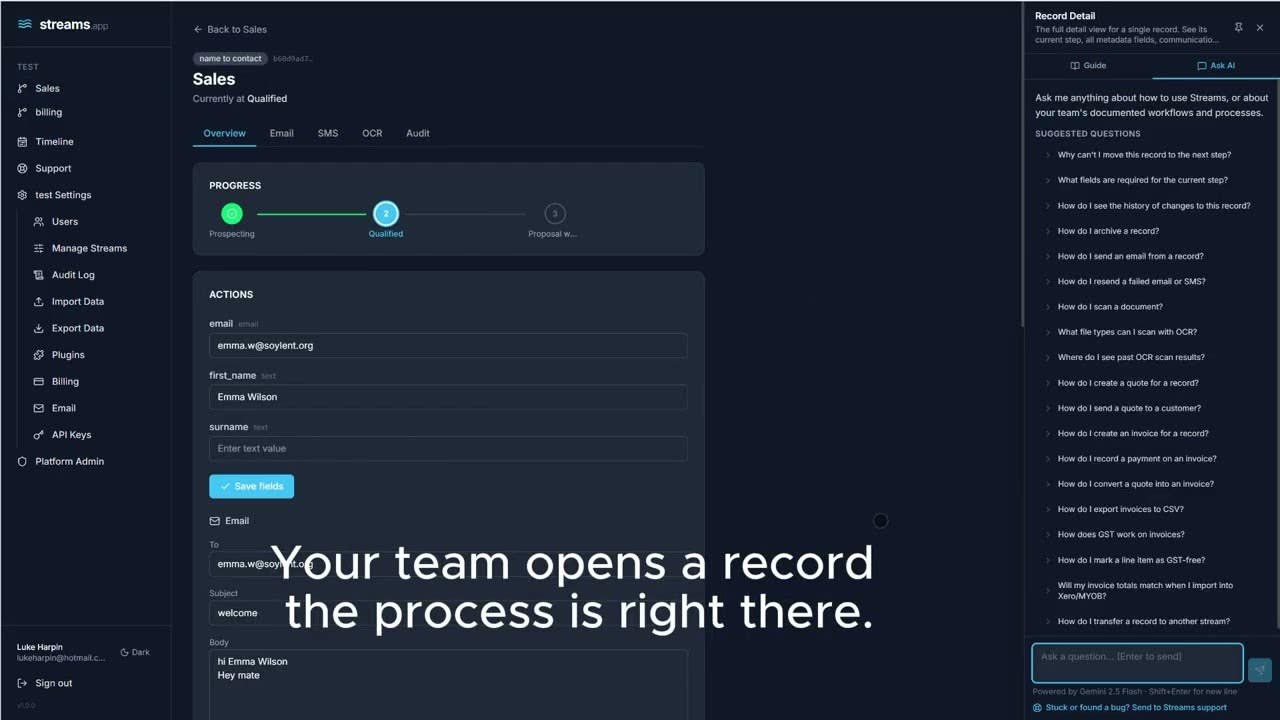
A starting point: the New Hire Onboarding template
Onboard every new hire the same way — offer, pre-boarding, first day, 30-day review. 5 stages and 8 fields, with written instructions on every stage. Change any of it, because it is your process.
Questions
- Can I start from a ready-made onboarding process?
- Yes. The New Hire Onboarding template creates the stages, the fields and the written instructions for each stage in one click, and you edit any of it afterwards.
- Can it stop a starter reaching day one without their paperwork?
- Yes. Mark each document as a required field on the paperwork stage. The record will not advance until they all have values, and the person moving it is told which are missing.
- Can IT be told automatically when an offer is accepted?
- Yes. Put an automation on the stage the starter enters: either create a task with an assignee and a due date, or send a templated email that fills in their details. It fires every time a record enters that stage.
- Is this an HR system?
- It runs the onboarding process, not payroll and not a personnel file system. If a process has stages, required paperwork and hand-offs between people, it fits. There are no pay runs or leave balances.
Weighing it up against
Other trades doing the same thing
Start with the free plan
Two users, 500 records and every feature switched on. No credit card, and your data stays in Australia.
Get started free